 how-to
How to Choose a Cruise Ship: 2026 Guide
Table of Contents
- Define Your Travel Personality and Priorities
- Understand Ship Size and Atmosphere
- How to Compare Cruise Lines
- Cruise Ship Cabin Selection Guide
- Best Family Cruise Lines 2026
- Evaluate Itinerary, Destinations, and Hidden Costs
- Make Your Final Decision and Book
- Frequently Asked Questions
Last Updated: September 29, 2026
Choosing the right cruise ship can make or break your vacation. With 21.7 million travelers projected to book ocean cruises in 2026 according to AAA cruise travel projections, the market is crowded with options. But most people approach this decision backwards, they pick a ship based on price or a friend's recommendation, then spend their vacation wishing they'd chosen differently.
This guide shows you how to choose cruise ship using a framework that cuts through the noise and matches you with the vessel that fits your needs.
Define Your Travel Personality and Priorities
Before researching ships, answer this: What do you actually want from a cruise? A cruise can be a floating resort, an adventure platform, a party destination, or a peaceful escape, depending on the ship.
Start by identifying what matters most to you:
- Relaxation focus: You want sea days, quiet pools, spa time
- Activity-driven: You want entertainment, classes, sports, nightlife
- Family-centered: You need programs for kids, accessible dining, safe environments
- Destination-focused: You care more about ports than onboard life
- Budget-conscious: You need predictable costs with minimal surprises
- Luxury-seeking: You prioritize service levels, exclusive dining, suite amenities
Understand Ship Size and Atmosphere
Ship size directly determines your onboard experience.
Mega Ships (4,000+ passengers) offer the most activities, entertainment, and dining options but feature crowded pools, long buffet waits, and less personal service. Best for families and activity seekers.
Large Ships (2,000-4,000 passengers) offer substantial amenities without overwhelming crowds and balance activity with relaxation.
Mid-Size Ships (1,000-2,000 passengers) offer intimate atmosphere with better staff-to-guest ratios and personalized service. Ideal for couples seeking calm.
Small Ships (under 1,000 passengers) access smaller ports and offer personalized experiences. You pay more for fewer activities but gain authenticity and exploration focus.
How to Compare Cruise Lines
Service Quality and Crew Standards Research shows that service quality correlates directly with crew-to-guest ratios and training standards. According to MDPI's qualitative review of cruise service, the SERVQUAL framework evaluates crew professionalism, food and beverage quality, entertainment caliber, cabin comfort, and policy fairness. These aren't subjective, they're observable and consistent across voyages.
Check recent passenger reviews on independent sites for patterns: consistent complaints about service speed, crew friendliness, or family welcome. Repeated complaints signal real problems.
Crew-to-Guest Ratio Higher crew-to-guest ratios mean better service and faster room cleaning. Industry standard ranges from 1:4 to 1:8. Premium lines run 1:3 or better; budget lines run 1:10 or worse.
Health and Safety Protocols (Post-Pandemic Priority) Compare lines on health protocols: onboard medical facilities, crew vaccination policies, isolation cabins, and outbreak transparency. Request the line's health and safety procedures before booking, transparency indicates higher standards.
Connectivity and Remote Work Capability WiFi speed and reliability vary dramatically across lines. Before booking, ask: What is bandwidth per cabin? Are there dedicated work areas? Does the ship have 5G or satellite internet? For remote workers, this factor can make or break a cruise.
Sustainability and Environmental Impact Compare lines on measurable sustainability: scrubber technology, waste management, and environmental partnerships. Check for carbon neutrality commitments and LNG engine investments. This information is often in corporate responsibility sections.
Onboard Credit and Hidden Costs
| Cruise Line Factor | What It Means | Why It Matters |
|---|---|---|
| Crew-to-guest ratio | Number of staff per passenger | Directly affects service speed and quality |
| Gratuity policy | Daily automatic charges | Adds $15-18 per person per day |
| Drink package | Alcoholic beverages included | Saves $200-400 per person per week |
| Specialty dining | Premium restaurants onboard | Adds $50-150 per meal per person |
| Internet | WiFi connectivity | Ranges from free to $35+ per day |
| Health protocols | Medical facilities and outbreak response | Critical for peace of mind |
| WiFi speed | Bandwidth for remote work | Affects productivity and communication |
Cruise Ship Cabin Selection Guide
Cabin Category Basics Interior cabins cost least but have no windows. Oceanview cabins add a window; balcony cabins add outdoor space. Each upgrade costs 20-30% more. Choose based on how much time you'll spend in your cabin.
Location Matters Cabins midship experience less motion. Mid-deck, midship cabins offer the best balance. Avoid cabins near nightclubs, elevators, or main gathering areas due to noise.
Balcony Rooms vs. Interior
Best Family Cruise Lines 2026
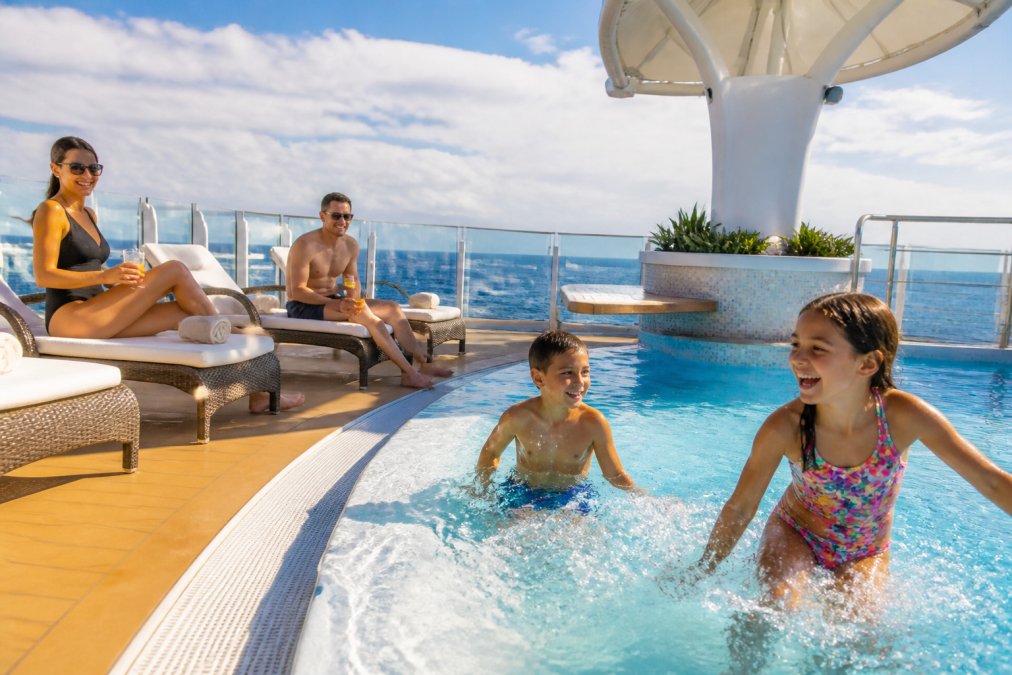
What Makes a Line Family-Friendly Family-focused cruise lines invest in kids' clubs, teen programs, family dining options, and safety protocols. They understand that parents need breaks and kids need age-appropriate engagement. According to Cruise Lines International Association 2025 State of the Cruise Industry Report, nearly 90% of cruisers indicate they intend to sail again, with families representing the fastest-growing segment.
Look for lines offering:
- Supervised kids' clubs by age group
- Flexible dining with family-friendly menus
- Onboard activities that appeal to children
- Stroller-friendly design and accessibility
- Clear safety and health protocols
Top Options for Families Disney Cruise Line dominates family cruising with high service standards and experiences engaging both children and adults. Premium pricing but excellent value. Royal Caribbean offers family-friendly mega ships with extensive kids' programs at mid-range pricing. Carnival attracts budget-conscious families with solid kids' clubs. Norwegian Cruise Line provides freestyle cruising with flexible dining and activity options.
Evaluate Itinerary, Destinations, and Hidden Costs
Destination Selection The Caribbean, Bahamas, and Bermuda command 45% of all cruise passengers according to Market.us cruise statistics, offering warm weather, consistent conditions, and established infrastructure. But consider alternatives based on your interests and travel style.
Alaska appeals to nature-focused travelers seeking glaciers, wildlife, and remote landscapes. Mediterranean itineraries attract culture seekers interested in history, art, and European ports. River cruises in Europe offer intimate destination immersion with smaller ships accessing inland waterways. Mexican Riviera cruises provide beach-focused relaxation with shorter sailing times from the West Coast. Caribbean itineraries vary widely, eastern routes emphasize island culture and beaches, while western routes focus on Cozumel diving and Belize adventure.
Shorter itineraries (3-5 days) suit first-time cruisers and those with limited time. Longer voyages (7+ days) appeal to experienced cruisers seeking deeper exploration.
Sea Days vs. Port Days Activity-focused travelers prefer more ports (5-6 per week); relaxation-focused prefer more sea days (3-4 per week). Review the specific itinerary before booking, a 7-day cruise might have 5 ports and 2 sea days, or 3 ports and 4 sea days. Check port arrival and departure times too.
The True Cost Breakdown: Beyond the Base Fare The advertised base fare typically covers only your cabin and basic meals. Everything else costs extra.
Mandatory Charges:
- Gratuities: $15-18 per person per day (automatically charged). A family of four on a 7-day cruise pays $420-504.
- Port fees and taxes: $50-150 per person depending on itinerary.
Optional but Common Charges:
- Drink packages: $60-100 per person per day.
- Specialty dining: $50-150 per meal per person.
- Internet: $15-35 per day or $60-150 for a week.
- Shore excursions: $50-300+ per person per port.
- Onboard spending: Spa, photos, casino. Average $200-400 per person per week.
- Travel insurance: $150-400 per person.
Real-World Example: A family of four books a 7-day Caribbean cruise with a base fare of $2,000 per person ($8,000 total). Here's what they actually spend:
| Category | Cost |
|---|---|
| Base cruise fare (4 people) | $8,000 |
| Gratuities ($16/person/day × 7 days × 4 people) | $448 |
| Port fees and taxes | $400 |
| Drink package (2 adults, 7 days) | $840 |
| Specialty dining (2 dinners × 4 people) | $400 |
| Internet (week package) | $120 |
| Shore excursions (3 ports × 4 people) | $1,200 |
| Onboard spending (spa, photos, misc.) | $400 |
| Travel insurance | $300 |
| Total Actual Cost | $11,708 |
The base fare represented only 68% of the total cost. Understanding this prevents budget shock.
Make Your Final Decision and Book
Once you've narrowed your options, make the final call strategically.
Frequently Asked Questions
What factors should I consider when choosing a cruise ship?
Start with your travel personality: are you seeking relaxation, adventure, family time, or adult-only experiences? Then evaluate ship size (mega-ships offer more amenities; smaller ships provide intimacy), passenger capacity, destination and itinerary, dining options, entertainment variety, staff-to-guest ratios, and total cost including gratuities, onboard credit, and shore excursions. Nearly 90% of cruisers intend to sail again, so matching your preferences now ensures you'll want to return.
Does the size of the cruise ship matter for a first-time cruiser?
Yes. Mega-ships (3,000+ passengers) offer more dining venues, entertainment, and activities, making them ideal for families and those seeking constant options. Mid-size ships (1,500-2,500 passengers) balance amenities with a less overwhelming atmosphere. Smaller ships provide personalized service and access to ports larger vessels cannot reach. First-timers often prefer mid-size or mega-ships for variety, but your preference for crowds, activities, and service level should guide your choice.
How do I know which cruise line is best for my family?
Evaluate the best family cruise lines 2026 by checking their passenger demographics, onboard entertainment designed for children, dining flexibility, cabin options, and staff-to-guest ratios. Review recent passenger feedback on service quality, food quality, and kid-friendly amenities. Consider whether you want all-inclusive packages or pay-as-you-go models. A travel advisor specializing in family cruises can help match your family's budget to the right line.
What hidden costs should I budget for on a cruise?
Beyond the base fare, budget for gratuities (typically $15-16 per person per day), specialty dining packages, beverage packages, shore excursions at ports of call, travel insurance, onboard credit for extras, and cabin upgrades. Many cruise lines now operate on a pay-as-you-go model for previously included services. Transparency on total cost of ownership is critical, work with a travel advisor to understand potential costs.