 how-to
How to Fix Travel Issues: A Step-by-Step Guide
Table of Contents
- What to Do When Travel Issues Happen
- How to Handle Flight Cancellations and Delays
- Understanding Your Airline Passenger Rights
- Solving Lost or Delayed Luggage Problems
- Managing Travel Insurance Claims and Documentation
- Fixing Connectivity, Navigation, and Safety Issues
- Preventing Travel Issues Before They Start
- Frequently Asked Questions
Last Updated: September 22, 2026
What to Do When Travel Issues Happen
Travel disruptions happen to everyone. One in 12 flights arrived an hour or more late in 2025, according to PIRG's Plane Truth 2026 report, and unexpected problems can derail even the best-planned vacation. The good news: you don't have to panic or lose money when travel issues strike.
This guide covers exactly how to fix travel issues when they happen. You'll learn the steps to take immediately, your legal rights as a passenger, and how to document everything for compensation claims.
How to Handle Flight Cancellations and Delays
When your flight gets cancelled or delayed, the first hour matters most, airlines process rebooking requests in order.
Immediate steps when you learn of a delay or cancellation:
- Check the airline's app or website first for automatic rebooking options
- Go to the airline counter if you're at the airport, call if you're not
- Ask for the next available flight on ANY airline, not just theirs
- Request meal vouchers, hotel, and ground transportation if applicable
- Take a photo of the cancellation notice on the departure board
- Get the airline agent's name and write down what they promised you
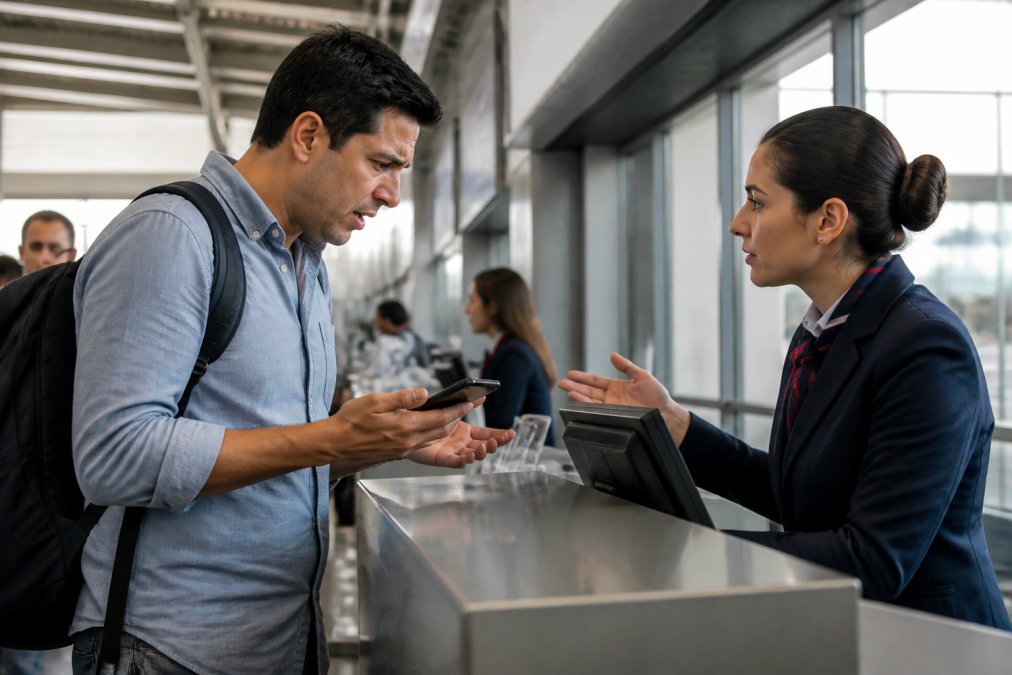
Ask about alternatives before accepting the first rebooking offer. Airlines must rebook you on competing carriers if their own flights are full, often getting you to your destination faster.
Know your airline passenger rights:
The Department of Transportation requires airlines to compensate passengers for controllable delays and cancellations:
- Delayed arrival over 3 hours: $250-$750 depending on flight distance
- Cancelled flight: Same compensation as delays, plus rebooking on another airline
- Involuntary bumping: $750 maximum
- Hotel and meals: Airlines must provide these if your flight is cancelled and you need to stay overnight
Weather and mechanical issues sometimes exempt airlines from paying, but overselling and crew problems don't.
Write down the airline representative's name, badge number, and what they told you. Take screenshots of the airline's app showing the cancellation. This documentation matters when you file a claim later.
Understanding Your Airline Passenger Rights
Your passenger rights exist because the Department of Transportation enforces them. Knowing what you're owed prevents airlines from offering you less than you deserve.
The law says airlines must get you to your destination on a later flight at no additional cost if they cancel your flight or delay it more than three hours.
- Flights under 250 miles: $250 compensation
- Flights 250-1,250 miles: $400 compensation
- Flights over 1,250 miles: $750 compensation
Solving Lost or Delayed Luggage Problems
Report lost luggage immediately at the airline counter before leaving the airport.
- Go to the baggage claim desk and report your missing bag
- Fill out a Property Irregularity Report (PIR)
- Get a copy of the report, this is your proof
- Write down the agent's name and report number
- Take a photo of the report
Managing Travel Insurance Claims and Documentation
Most travel insurance claims are denied not because the loss wasn't covered, but because travelers didn't document it properly. Here's how to collect and organize evidence so your claim gets approved.
The essential documentation checklist for every claim type:
For flight cancellations and delays:
- Screenshot of the airline's app or website showing the cancellation or delay time
- Your original booking confirmation (email or PDF)
- Boarding pass (photo or digital copy)
- Airline's written communication about the cancellation (email, text, or printed notice)
- Proof of when you learned about the disruption (timestamp on screenshot)
- Airline agent's name and badge number (if you spoke to someone at the counter)
For missed connections:
- Boarding pass for the flight you missed
- Boarding pass for the connecting flight you couldn't make
- Proof of the delay on your first flight (airline confirmation or screenshot)
- Hotel receipt if you had to stay overnight
- Receipts for meals and ground transportation
For lost or delayed luggage:
- Property Irregularity Report (PIR), get a copy at the baggage desk before leaving the airport
- Photo of your luggage tag and boarding pass
- Receipts for replacement items purchased while waiting (clothing, toiletries, medications, chargers)
- Credit card or bank statements showing the charges
- Photos of damaged luggage (if applicable) taken before opening the bag
- Airline's written response about the bag status (email confirmation)
For trip cancellation or interruption:
- Original booking confirmation for flights, hotels, tours, or activities
- Proof of the reason for cancellation (doctor's note, death certificate, airline cancellation notice, government travel warning)
- Receipts showing what you paid
- Proof of payment (credit card statement, bank transfer confirmation)
- Any communication from the vendor about the cancellation
For medical emergencies abroad:
- Hospital or clinic receipt and itemized bill
- Doctor's report or diagnosis letter
- Prescription receipts
- Proof of payment (credit card statement, bank transfer)
- Proof that the condition wasn't pre-existing (if relevant to your policy)
- Gather everything before filing. Don't submit partial claims; insurers process claims once.
- Create a written summary with dates, times, flight numbers, and costs.
- Organize documents chronologically and label each one.
- Scan everything before submitting and keep copies.
- Submit through the insurer's online portal if available, it's faster and creates a timestamped record.
- Include a cover letter with your claim amount, policy number, and trip dates.
- Track your claim and follow up within 30 days if you don't hear back.
Common reasons claims get denied:
- Missing receipts. Insurers want itemized receipts, not just credit card statements.
- Late submission. Most policies require claims within 90 days of your trip ending.
- Pre-existing knowledge. If you bought insurance after learning about a problem, your claim won't be covered.
- Excluded circumstances. Read your policy's exclusions, pandemics, government travel warnings, and pre-existing medical conditions are often excluded.
- Insufficient documentation. Document everything at the time it happens.
- Failure to mitigate. If you refused rebooking after a cancellation, insurers may not cover your hotel stay.
Fixing Connectivity, Navigation, and Safety Issues
Connectivity problems, navigation failures, and safety risks can derail your trip. Solutions differ for leisure travelers and remote workers.
Solve connectivity problems for leisure travelers:
- Buy an eSIM before you leave. Providers like Airalo, Nomad, and GigSky offer plans starting at $5 for 1 GB of data and work in 200+ countries.
- Get a local SIM card at the airport if eSIM isn't available ($10-$30 for a week of data).
- Use airport and hotel WiFi for calls via WhatsApp, FaceTime, or Telegram.
- Download offline maps (Google Maps, Maps.me, Citymapper) before departure.
- Write down important phone numbers: your bank's fraud line, airline customer service, hotel phone, and insurance claims line.
Critical connectivity solutions for remote workers:
Before you travel:
- Test your eSIM in your home country a week before departure.
- Buy a backup eSIM from a different provider.
- Test your VPN and confirm it works with your eSIM provider's network.
- Identify backup WiFi locations (coworking spaces, cafes, libraries) near your accommodation.
- Notify your employer or clients about your travel dates and timezone.
If your connectivity fails:
- Switch to your backup eSIM immediately.
- Go to a coworking space (day passes $15-$30).
- Use your phone as a hotspot if you have data.
- Contact your eSIM provider's 24/7 support.
- File a claim with your travel insurance if you lose income; document the outage and income lost.
Handle navigation and transit disruptions:
Prevent and respond to travel scams:
Prevention:
- Use official taxis or ride-sharing apps only.
- Book tours through your hotel or established operators.
- Buy tickets from official venues, not scalpers.
- Don't exchange money with street vendors; use ATMs or banks.
- Keep valuables in a hotel safe.
- Be skeptical of unsolicited offers.
If scammed:
- Report to local police immediately and get a police report number.
- Contact your credit card company within 24 hours.
- Notify your bank if cash was stolen.
- File a claim with your travel insurance with the police report number.
- Report the scam to the FTC at reportfraud.ftc.gov.
Preventing Travel Issues Before They Start
The best fix is prevention. Most travel issues are avoidable with planning.
Frequently Asked Questions
What are the most common travel problems and how do I fix them?
The most frequent travel issues include flight delays (one in 12 flights arrived an hour or more late in 2025), lost or delayed luggage, flight cancellations, lost travel documents, and connectivity problems. To fix them: contact your airline immediately for delays or cancellations, report lost baggage at the airline counter within 21 days, file a travel insurance claim if eligible, and contact your embassy for lost documents. Digital tools like real-time flight tracking apps and backup digital copies of important documents prevent many issues before they escalate.
What should I do if my flight is canceled or significantly delayed?
First, check your airline's app or website for rebooking options. Contact the airline counter directly for immediate assistance. Under Department of Transportation regulations, airlines must offer rebooking on the next available flight at no additional cost or a full refund. If delayed more than three hours on arrival, you may be entitled to compensation up to $750 depending on flight distance. Document the delay with your boarding pass and take photos of delay notices. File a claim with your airline within 30 days and consider filing with travel insurance if you have coverage.
How do I file a travel insurance claim after a disruption?
Start by gathering documentation: receipts, boarding passes, airline cancellation notices, hotel confirmations for unexpected stays, and medical records if applicable. Contact your insurance provider within the timeframe specified in your policy (typically 30-90 days). Submit your claim with all supporting documents and a detailed description of the disruption. Keep copies of everything you send. Most providers respond within 15-30 days. If denied, request a written explanation and appeal if you believe the claim meets policy terms.
What are my rights as a passenger under Department of Transportation regulations?
The Department of Transportation protects passengers through the Airline Customer Service Plan. You have the right to prompt rebooking on another flight at no cost, compensation for delays exceeding three hours (up to $750 depending on distance), and refunds for canceled flights. Airlines must provide timely information about delays and cancellations, accommodate passengers with disabilities, and handle baggage within specific timeframes. If an airline violates these rights, file a complaint with the Department of Transportation's Aviation Consumer Protection Division.