 how-to
How to Manage Cruise Cabin Selection
Table of Contents
- Understand Your Cruise Cabin Selection Priorities
- Explore Different Cruise Cabin Types
- Find the Best Cruise Cabin Location for Your Needs
- Reduce Cruise Cabin Noise Tips and Strategies
- Use Deck Plans to Compare Cabin Locations
- Change Your Cruise Cabin After Booking
- Verify Cabin Details Before Your Cruise
- Frequently Asked Questions
Last Updated: October 7, 2026
Understand Your Cruise Cabin Selection Priorities
Before you book a cruise, decide what matters most: Are you traveling with kids? Do you get motion sickness easily?
List your non-negotiables: budget, cabin size, proximity to dining areas, kids' clubs, or entertainment venues. We help first responders and families identify these priorities early so the cruise cabin selection process becomes straightforward instead of overwhelming.
Consider your travel style. Research on cruise passenger behavior shows that new and repeat cruise customers often have different preferences regarding cabin type, location, and booking timing.
Write down three to five priorities and keep the list visible as you explore cabin options. This prevents decision fatigue and keeps you focused on what matters.
Explore Different Cruise Cabin Types
Cruise cabins fall into distinct categories with different features, views, and price points. The sections below weigh what you actually get for the premium you pay.
Interior Cabins
Interior cabins have no windows or portholes and are the most affordable cabin type on any ship. You sleep there and spend your days exploring the ship and ports.
Interior cabins work well for:
- Budget-focused travelers
- People who won't spend much time in their cabin
- Families with young children who need naps
The trade-off: you sacrifice natural light and views. Some travelers find windowless cabins claustrophobic; others don't mind since they're rarely inside during daylight. If you expect fewer than two waking hours per day in the cabin, the savings usually outweigh the missing window.
Ocean-View Cabins
Ocean-view cabins have a window or porthole, giving you natural light and an ocean view. They cost more than interior options but less than balcony cabins.
Ocean-view cabins offer:
- Natural light during the day
- Ocean views without the premium price
- More psychological comfort than interior cabins
Window size varies by ship and location, from small portholes to larger windows. Ask your travel agent or the cruise line about specific sizes before booking. On older ships, some ocean-view cabins are partially blocked by lifeboats or structural equipment, so confirm the view before you commit.
Balcony Cabins and Suites
Balcony cabins include a private outdoor space you can step onto whenever you want. Suites are larger cabins with upgraded amenities, sometimes including multiple rooms, bigger balconies, and perks like priority dining reservations or complimentary specialty restaurants.
Balcony cabins appeal to:
- Travelers who value outdoor space and privacy
- Couples seeking romantic moments
- People who want to relax without leaving their cabin
Suites add luxury and space at a significantly higher cost. For many families, a standard balcony cabin delivers the best value among premium options.
Weighing the Premium: A Cost-Benefit View
Price premiums only make sense when the extra space, privacy, or view changes how you use the cabin. Ask:
- How many waking hours will you spend in the cabin? A balcony pays off if you linger over morning coffee or unwind before dinner. If you're off the ship at every port and at shows every night, the premium buys little.
- Does privacy matter? A balcony gives you a private outdoor retreat; an ocean-view window gives light but no private space.
- Are you traveling with kids? A balcony extends your living area, but verify railing height and door locks. Some families prefer two connecting interior cabins over one balcony for the same budget.
Match the cabin to the traveler:
- Families with young children: Interior or ocean-view cabins near kids' clubs reduce cost and walking distance. Connecting cabins beat a single suite when you need separate sleep schedules.
- Couples: A balcony often delivers the best value, especially on scenic itineraries.
- Solo travelers: Interior cabins minimize the single supplement; some ships offer dedicated solo cabins with no supplement.
- Light sleepers: Location matters more than cabin type. A quiet interior cabin beats a noisy balcony every time.
Find the Best Cruise Cabin Location for Your Needs
Location within the ship matters as much as cabin type. The same cabin category in different locations delivers completely different experiences.
Midship vs. Forward vs. Aft Locations
The ship divides into three sections: midship (middle), forward (front), and aft (back).
Midship cabins are closest to the ship's center of gravity.
Forward cabins sit toward the bow and move more during waves.
Aft cabins sit toward the stern and also experience more motion than midship.
For families with young children or anyone prone to motion sickness, midship locations reduce discomfort.
Deck Level and Ship Motion
Higher decks move more than lower decks: the higher you are, the more you feel the ship's motion, while lower decks experience less vertical movement.
If seasickness concerns you:
- Choose lower decks
- Select midship locations
- Request cabins near the ship's center
If you don't get motion sickness, higher decks offer better views. You'll enjoy more natural light and ocean vistas. The trade-off is increased motion during rough seas.
Proximity to Dining, Entertainment, and Facilities
Walking distance matters on a cruise ship. On massive ships, getting from your cabin to the dining room can take five to ten minutes, which affects your daily routine with young children.
Consider proximity to:
- Main dining room
- Buffet restaurant
- Kids' clubs (if traveling with children)
- Entertainment venues
Cabins near these areas cost more because they're convenient. Cabins far from main areas cost less but require more walking. For families with small children, the convenience premium often makes sense.
Reduce Cruise Cabin Noise Tips and Strategies
Noise is one of the most common cabin complaints. Cruise service quality research identifies cabin comfort as a key factor in overall cruise satisfaction.
Noisy cabin locations include:
- Cabins above or below nightclubs and bars
- Cabins near elevators
- Cabins on main hallways near high-traffic areas
- Cabins above dining areas
Request cabins away from these zones. Ask your travel agent about the quietest locations on your specific ship.
Ask the cruise line's deck plan which areas see the most foot traffic. Avoid those sections.
Bring earplugs. Even the quietest cabins might have occasional noise from neighboring cabins or hallway activity. Quality earplugs cost little and improve sleep quality.
Use Deck Plans to Compare Cabin Locations
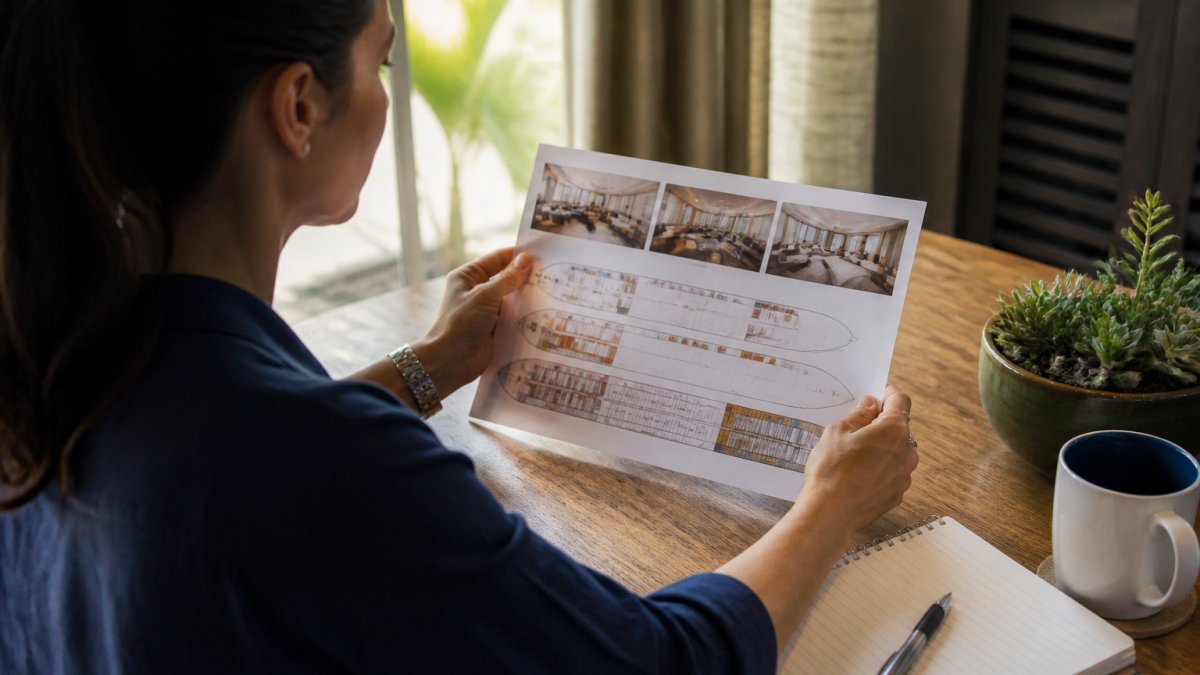
Every cruise ship publishes a deck plan showing cabin locations relative to elevators, dining areas, and public spaces.
Study the deck plan before booking. Look for:
- Cabin location relative to elevators
- Proximity to dining venues
- Distance to entertainment areas
- Nearby high-traffic zones
Some cruise lines let you select a specific cabin during booking; others assign randomly.
Pay attention to lifeboat placements. Cabins with obstructed views cost less but offer limited outdoor visibility.
Compare multiple cabin options using the same deck plan. This side-by-side comparison reveals which location best serves your priorities.
Change Your Cruise Cabin After Booking
If you book a cabin and later wish you'd chosen differently, you can often change it after booking, though options depend on your cruise line and how far in advance you request the change. Here are the rules most travelers don't learn until they try to switch.
When Cabin Changes Are Allowed
Most cruise lines allow a cabin change if the new cabin is in the same or a higher category and inventory is available. Key variables:
- Fare type. Promotional and non-refundable fares often restrict changes or trigger a rebooking at current prices; flexible fares allow changes with less friction.
- Timing. Changes are easiest right after booking and get harder as the sailing fills. Many lines stop self-service changes within a set window before departure.
- Inventory. You can only move to an open cabin. Popular categories sell out first, so waiting rarely improves your options.
What It Costs
Expect one of three outcomes:
- No charge. Same-category swaps within the same fare are often free when inventory allows.
- Fare difference. Moving to a higher category usually means paying the difference between your original fare and the current price of the new cabin. If fares have risen since you booked, that difference can be larger than expected.
- Change or rebooking fee. Some fares charge a flat per-person fee, and a change can reset your fare to today's rate.
If the new cabin costs less, you may receive a credit or onboard credit rather than a cash refund, depending on the fare rules.
Guaranteed vs. Assigned Cabins
If you booked a guaranteed cabin (a category without a specific number), you typically can't request a specific cabin until the line assigns one, usually closer to departure. Once assigned, you may request a change if inventory allows. If you booked a specific cabin number, you can usually request a swap directly.
How to Request a Change
- Contact your travel agent or the cruise line as soon as you decide to move.
- Have your booking number, current cabin number, and preferred new cabin ready.
- Ask whether the change triggers a rebooking, a fee, or a fare difference.
- Get the confirmed new cabin number and any cost change in writing.
Verify Before You Board
After any change, re-confirm your cabin number, category, deck, and bed configuration. A minor-looking change can move you near an elevator, above a venue, or into an obstructed-view cabin, so check the new location on the deck plan before you finalize.
Verify Cabin Details Before Your Cruise
Before you board, request these details from the cruise line:
- Exact cabin number
- Cabin category (interior, ocean-view, balcony, suite)
- Deck level and specific location on the ship
- Exact amenities included
This prevents surprises: some travelers book a balcony only to find it tiny or partially obstructed, or expect a bed configuration that isn't there.
Ask your travel agent to confirm these details in writing and request photos of your specific cabin if available.
Check any special requests: if you asked for a quiet cabin, confirm the location supports it, and if you need accessibility features, verify they're included in your assignment.
Choosing the right cruise cabin means balancing budget, comfort, and convenience.
Frequently Asked Questions
What should I consider when choosing between an inside, ocean-view, and balcony cabin?
Interior cabins cost less and work well for budget-conscious travelers who plan to spend time on deck. Ocean-view cabins provide natural light and views at a moderate price point. Balcony cabins offer privacy and outdoor space but cost significantly more. Your choice depends on your budget, how much time you'll spend in the cabin, and whether you value a view or outdoor space. Research shows cabin comfort ranks among the top factors in cruise satisfaction, so prioritize what matters most to your travel style.
Can you change your cruise cabin after booking?
Most cruise lines allow cabin changes, but policies vary by line and booking type. You can often request a change directly through the cruise line's website or by contacting their reservations team. Some changes are free, while others may incur fees depending on the cabin category upgrade or downgrade. Changes are subject to availability, so request modifications as early as possible. Contact your cruise line or travel agent immediately if you need to change your cabin after booking.
Which cruise cabin location is best for avoiding motion sickness?
Midship cabins on lower to mid-deck levels experience the least motion because the ship's center moves less than the bow or stern. Avoid forward and aft locations if you're prone to seasickness. Higher deck levels amplify motion more than lower ones. Cabin location affects motion, noise, and convenience as much as the cabin category itself, so review the deck plan carefully. If motion sickness is a concern, prioritize midship placement over other cabin features.
How do I know if a cabin location will be noisy?
Avoid cabins directly above or below high-traffic areas like dining rooms, entertainment venues, kids' clubs, elevators, and pools. Cabins near the engine room or thrusters also experience more vibration and noise. Review the deck plan to identify these zones, and check guest reviews for specific cabin numbers if available. Request a cabin away from public spaces and machinery. Some cruise lines mark noisy areas on their deck plans, so ask your travel agent or the cruise line directly about quiet cabin locations.